Midterm Strategy: Trump Dials Michigan Voters in Final Push
The president held a brief phone town hall to rally support for key Senate and House races days before the election.
By Ethan Cooper ·

President Donald Trump contacted Michigan voters by phone on Saturday to urge them to turn out for the midterm election on Nov. 3. The call lasted approximately 12 minutes and marked his final appearance in the state before voting day. During the tele-rally, he declared the Senate contest between Republican Mike Rogers and Democrat Abdul El-Sayed the most important in state history.
“Save Michigan from this embarrassment,” Trump said during the broadcast. He asked voters to treat the race as if he were personally on the ballot, a tactic he used at a rally in Port Huron on Oct. 25. The Republican National Committee described the event as an 11th-hour effort spanning 19 states, including Texas, Alaska, Florida, and New Mexico.
Trump specifically targeted Republican turnout in three toss-up U.S. House districts: the 4th, 7th, and 10th. These districts are currently held by Republicans but have become among the most expensive races in recent history. He vouched for candidates including John James, Bill Huizenga, Mike Bouchard, and Tom Barrett, predicting a landslide if his supporters cast their ballots.
The president announced the call on social media less than an hour before it began, instructing Michigan followers to answer their phones. It remains unclear how many voters actually joined the line. This telephone appeal follows a ground campaign by Vice President JD Vance, who stumped for many of the same candidates in Howell on Tuesday.
Democratic efforts have also intensified. Former President Barack Obama rallied with the Democratic ticket in Detroit last weekend. He described Nov. 3 as the last best chance to rein in the administration’s actions. Obama campaigned for Abdul El-Sayed and gubernatorial nominee Jocelyn Benson.
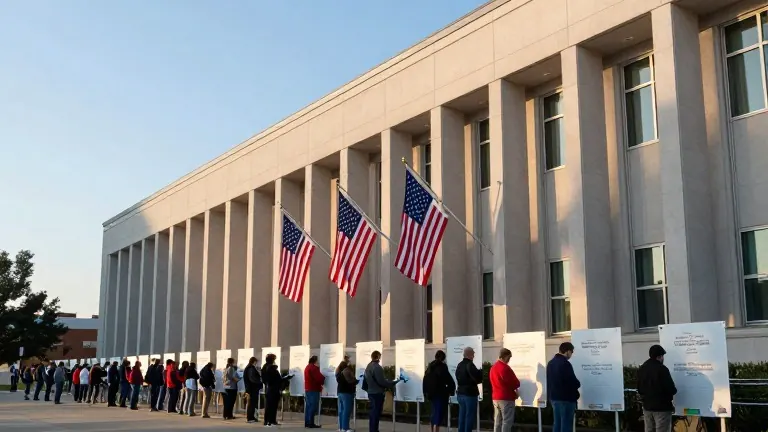
Early voting activity in Michigan shows high engagement. As of Nov. 1, just under 2.2 million Michiganders had cast absentee ballots or voted in person. This figure represents approximately 29% of all active registered voters in the state. Early voting concluded on Nov. 1.
Trump is not expected to campaign in Michigan again before the election. His Saturday call served as the final national-level intervention in the state’s competitive races. The focus remained on securing the Senate seat and flipping or holding key House seats that could influence congressional control.