Five States Ban Noncitizen Voting After Overwhelming Ballot Wins
Kansas, Alaska, Arkansas, South Dakota, and West Virginia approved measures codifying citizenship requirements, while California and Arizona rejected similar proposals.
By Grace Sullivan ·

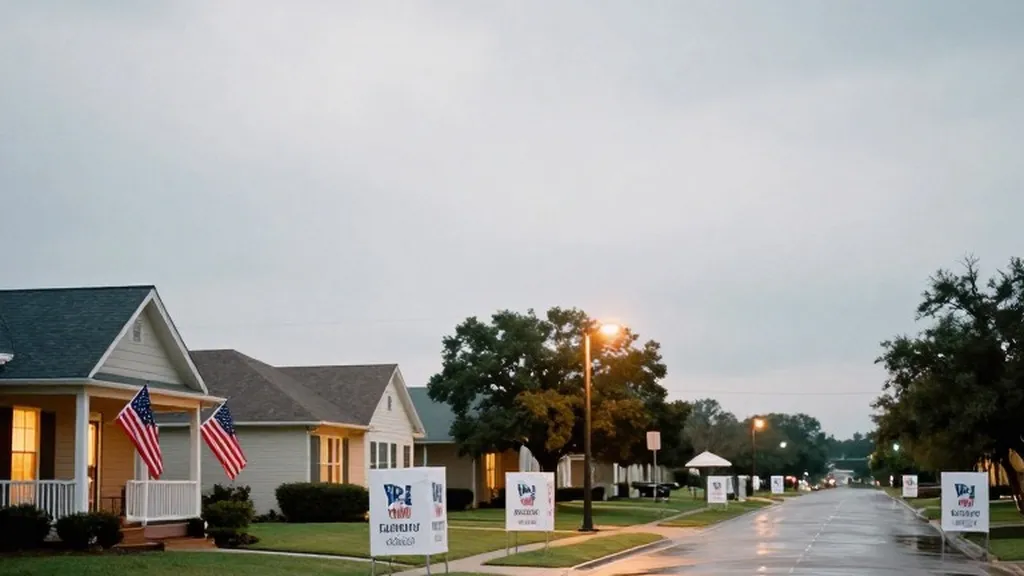
Voters in five states approved ballot measures that explicitly bar noncitizens from casting ballots in state and local races. The initiatives passed in Kansas, Alaska, Arkansas, South Dakota, and West Virginia, with support levels exceeding 60 percent in each jurisdiction. These state-level actions codify citizenship requirements despite existing federal law that already prohibits noncitizens from voting in federal elections.
The results follow a pattern of legislative efforts to tighten voter eligibility rules. In Congress, Republicans and Democrats sparred over the SAVE America Act, a bill requiring proof of citizenship for voter registration. Senate Majority Leader John Thune stated that Republicans lacked the necessary votes to pass the bill. Democrats argued the legislation would disenfranchise eligible voters, and the dispute contributed to a prolonged standoff during a Department of Homeland Security shutdown.
Not all related measures succeeded. In California, voters defeated Proposition 39 by a margin of roughly 17 percentage points. The final count showed 58.5 percent voting against the measure and 41.4 percent in favor. The proposal would have required voter ID and additional citizenship-verification procedures. Jason Snead, executive director of the Honest Elections Project, attributed the defeat to the political environment in California and noted that the left poured more than $30 million into the campaign to stop the measure.
Arizona also saw a related ballot measure fail. Snead described the Arizona proposal as broader legislation that included several provisions beyond noncitizen voting, which may have contributed to its loss. The state-level momentum now coincides with a conservative-majority Supreme Court preparing to review a related dispute involving Arizona. The case, Republican National Committee v. Mi Familia Vota, will determine whether a state can require proof of citizenship on its voter registration form and remove suspected noncitizens from the rolls before an election.
Election integrity advocates view the recent wins as strong evidence for the push to require proof of citizenship for federal voter registration. Snead cited a 2024 Gallup poll finding that 83 percent of Americans support requiring first-time voters to provide proof of citizenship, a figure that includes 66 percent of Democrats. He told Fox News Digital that the popularity of such measures is clear and that the left is far out of step with the American public.
Hans von Spakovsky, a former member of the Federal Election Commission and senior legal fellow of Advancing American Freedom, criticized the Democratic Party for turning a 90-10 issue into a highly politicized fight. He warned that the newly passed state provisions may prove ineffective unless states are allowed to verify voters’ citizenship. Spakovsky pointed to the upcoming Supreme Court case as a key test for federal law regarding documentary proof of citizenship.
Snead emphasized that only citizens should vote in American elections. He cited recent arrests by the Justice Department and failures in New Jersey’s automatic voter registration system, which added 6,600 noncitizens to the rolls, with almost 400 of them voting. Spakovsky noted that a ruling in favor of Arizona would only apply to future registrations. He expressed concern that Democrats might defund the SAVE database at the Department of Homeland Security to prevent states from using it to check the citizenship of already registered voters.
More Politics · National news · Report a business · Got a Story?