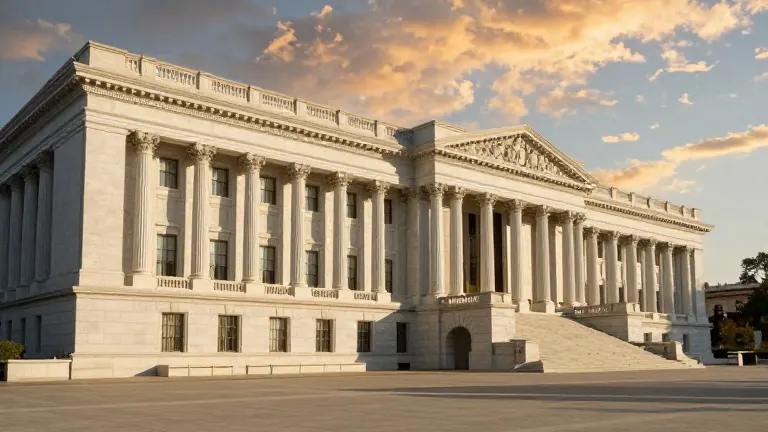
Trump signs decree requiring Congressional approval for Oval Office changes
The move establishes the room as a national monument, a step taken the day after Republicans lost control of Congress in the midterm elections.
By Luis Medina ·
President Donald Trump signed a presidential proclamation on Thursday that designates the Oval Office and the Cabinet Room as a national monument. Under the new rule, any major modifications to the spaces would require approval from Congress. The action serves as a formal barrier against future leaders who might wish to restyle the iconic office, a space Trump has filled with gold accents and portraits during his second term.
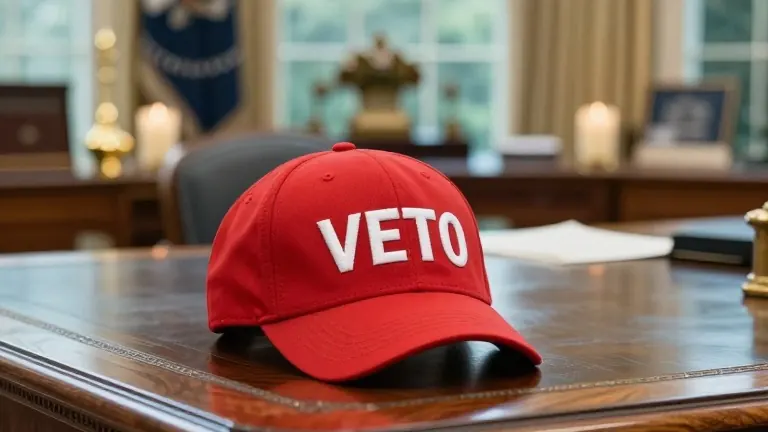
The signing took place at the Resolute Desk, where a red baseball cap reading “VETO” sat prominently on the surface. The cap served as a visual cue to the shifting balance of power in Washington, occurring the day after Trump’s party was swept aside in Tuesday’s midterm elections. Despite the political defeat, Trump focused his remarks on preserving the physical state of the White House.
Trump described the proclamation as a defense against future leaders who might alter the room’s appearance. “It will not be allowed to be touched by anybody, destroyed, ripped down by stupid people, in order to build something in a slightly different shape,” Trump said. He emphasized that the room serves as a symbol, much like the White House itself.
The legal mechanism of a presidential proclamation has historically been reversible. Previous presidents, including Trump, have used this tool to roll back or create national monuments. While the new decree adds a layer of protection, it does not create an immutable legal status without Congressional consent for major changes.
The proclamation marks the third consecutive day this week that the president has addressed his Washington construction projects. On Monday, he spoke at the Lincoln Memorial Reflecting Pool regarding renovations to that landmark. On Wednesday, he signed the final beam for his ballroom project. This week’s focus on interior design contrasts with the usual post-election period of political strategy.
Since returning to the White House, Trump has overseen numerous design changes, including the addition of a copy of the Declaration of Independence and numerous golden accents in the Oval Office. He has faced several lawsuits alleging that some of these beautification projects were completed without necessary approvals. Trump suggested the room might face future threats, stating, “If anybody ever decides to come and start knocking down walls, you call me wherever I may be, and I’ll come back here and I’ll make sure it never happens.”
Democrats have begun preparing for increased scrutiny of the president’s projects. On Thursday, Connecticut Sen. Richard Blumenthal, the top Democrat on the Homeland Security Committee’s Permanent Subcommittee on Investigations, sent letters to known donors of the Trump ballroom. The letters demand information or warn of “alternative measures to obtain compliance.”