Tarrant voters choose governor amid 18-18 national split
As polls open at 7 a.m. In Fort Worth and Arlington, state and national races hinge on 36 governorships where Democrats seek a majority for the first time in 16 years.
By Jenna Mitchell ·
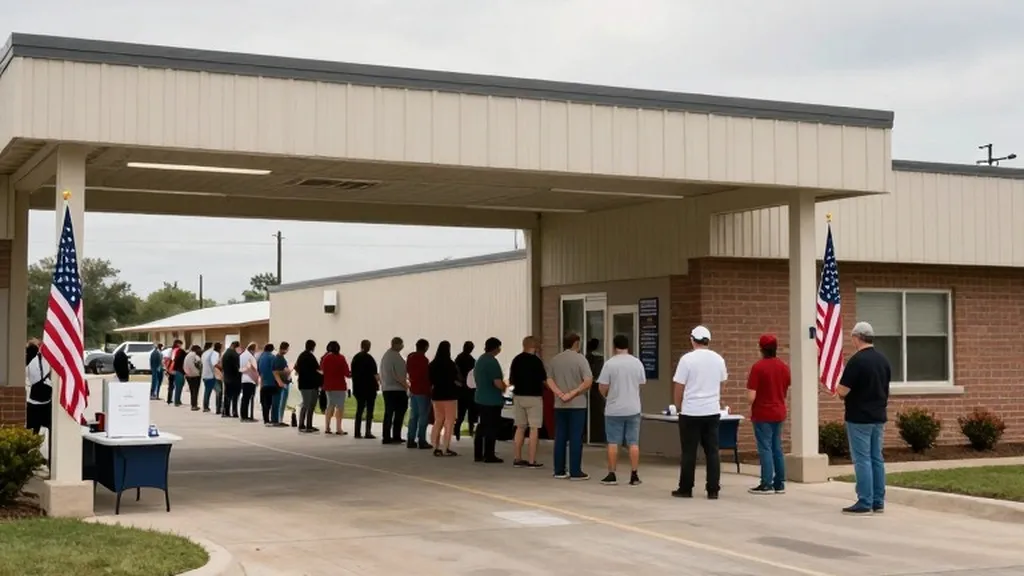
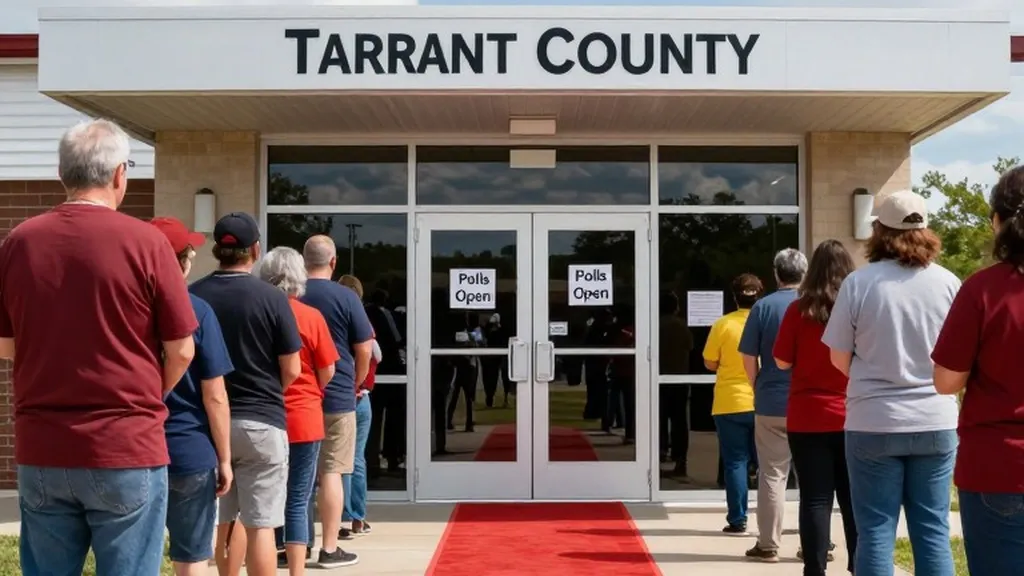
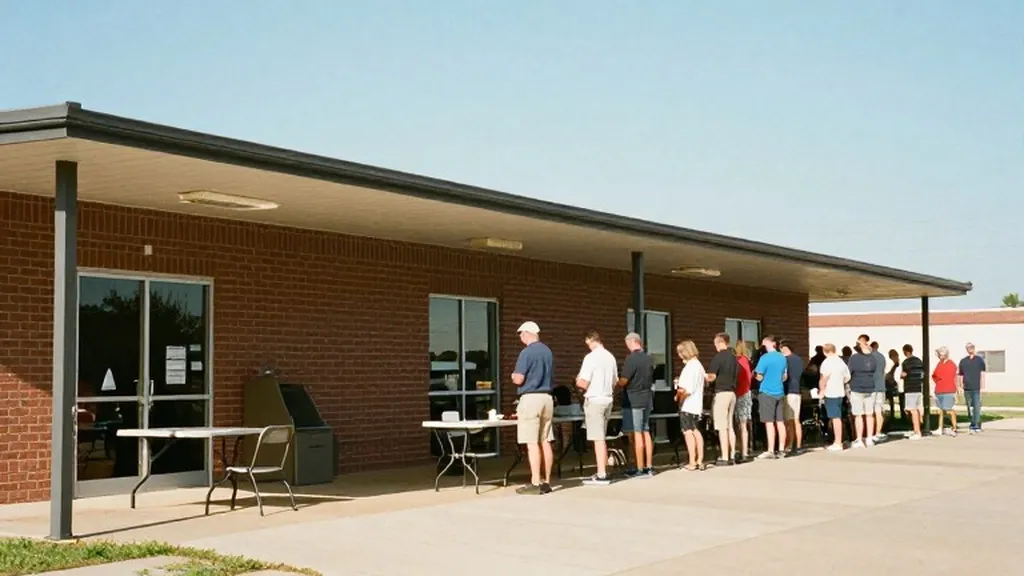
Polls in Tarrant County opened at 7 a.m. Tuesday and remain open until 7 p.m. Residents in Fort Worth, Arlington, Irving, Grand Prairie, Mansfield, and Flower Mound are casting ballots in a midterm election that will determine the balance of power in the U.S. Congress and the state government. Texans are voting for the governor, a U.S. Senate candidate, and all members of the U.S. House of Representatives, along with state legislative offices and local measures that vary by county. The Associated Press describes the day as a referendum on President Donald Trump's second term, with many voters expressing frustration over high prices and an unpopular war with Iran.
In Texas, incumbent Republican Governor Greg Abbott is running for reelection. He faces a competitive field in a state that Trump won by a margin of 13.6 points in 2024. The Associated Press identifies Texas as one of the competitive governor races in the country. Voters in the state are also deciding who will succeed Senator John Cornyn, who lost the primary runoff. The Associated Press notes that Republican Attorney General Ken Paxton, who received Trump's endorsement over Cornyn in the primary, is running against Democrat James Talarico for the Senate seat.
Nationally, voters are choosing 36 governors, a number that reflects a precise 18 to 18 split between the two major parties among the offices on the ballot. Heading into the election, Republicans held 26 governor's offices and Democrats held 24. 19 of these races feature no incumbent on the ballot. Fifteen governors are term-limited, while others, including Iowa's Kim Reynolds, Minnesota's Tim Walz, and Wisconsin's Tony Evers, chose not to run. Rhode Island's Daniel McKee did not run after losing his primary. Democrats need a net gain of two governorships to achieve a nationwide majority, a status they have not held since 2010.
Nine battleground governor races are identified: Alaska, Arizona, Georgia, Iowa, Kansas, Michigan, Nevada, Ohio, and Wisconsin. In Georgia, Republican health care executive Rick Jackson is challenging Democratic former Atlanta Mayor Keisha Lance Bottoms to succeed Brian Kemp. In Nevada, Republican Governor Joe Lombardo is facing Democratic Attorney General Aaron Ford. In Ohio, Republican Vivek Ramaswamy is running against Democrat Amy Acton. Ramaswamy's campaign faced backlash over an advertisement featuring Acton's estranged mother. Democrats are hoping to hold a majority of governorships for the first time in two decades.
Democrats are defending five governorships in states that Trump won in 2024, including Arizona, Kansas, Michigan, Pennsylvania, and Wisconsin. Republicans are defending two governorships in states that Kamala Harris won, specifically New Hampshire and Vermont. The outcome of these races will influence the political landscape for the next four years and may impact the path of potential 2028 presidential candidates. A strong performance for either party could complicate or boost the prospects of figures such as Vice President JD Vance, Governor Gavin Newsom, or Governor JB Pritzker.
In the U.S. Senate, 35 of 100 seats are up for grabs, including 33 regular elections and two special elections. Republicans currently hold 53 seats, while Democrats hold 45, plus two independents who caucus with Democrats. Democrats need a net gain of four seats to claim a majority, whereas Republicans can afford to lose only two. Eleven senators are not running again, including four Democrats and seven Republicans. The Associated Press highlights key matchups in North Carolina, Georgia, Ohio, Michigan, Texas, Maine, New Hampshire, and Kansas. In Maine, Senator Susan Collins is facing Democratic former state Senate President Troy Jackson in a race that the Associated Press calls competitive due to economic strain and tariffs.
For the U.S. House, all 435 seats are on the ballot. Republicans hold 218 seats and Democrats hold 214, with one independent and vacancies. Democrats need a net gain of three districts to secure a majority, while Republicans can lose no more than two. 46 battleground districts are counted, with 25 held by Democrats and 21 by Republicans. 60 House incumbents did not run again, including 23 Democrats and 37 Republicans. Six states, including Texas, are using new congressional maps after mid-decade redistricting. Republicans were bracing to lose the House and fighting to hold the Senate, with one or two seats potentially tipping either chamber.
Voter turnout has been high, with more than 57 million people having already voted as of Monday, surpassing the early vote totals of four years ago in many closely watched states. The 2026 elections are likely to be the most expensive in history, with Republican committees outspending Democratic committees at the party level. However, Democrats outraised their opponents at the candidate level. Trump-affiliated groups and Elon Musk contributed significantly to Republican fundraising efforts. An analysis of AdImpact data shows that 88.1% of Republican general election TV ad spending went to states and districts Trump won in 2024.
The U.S. Postal Service added hours, staff, and special lines to ensure mail ballots are counted on time. A federal judge temporarily barred the Trump administration from carrying out a plan to prevent noncitizen voting, a move critics say risks disenfranchising eligible voters. Another judge ordered the administration to stop demanding that California election officials segregate ballots cast by people on lists of suspected noncitizens. These legal developments have added a layer of uncertainty to the election administration process. The Associated Press notes that Trump has continued to make claims about voting fraud, including that noncitizens vote in large numbers, and his administration has sued in Alaska and California.