Georgia records 5.5 million tourist visits amid two-year protest crisis
Visitor numbers rose 8.4 percent in 2025 while Georgian Dream faces its second anniversary of the political turmoil sparked by the 2024 elections.
By Jenna Mitchell ·
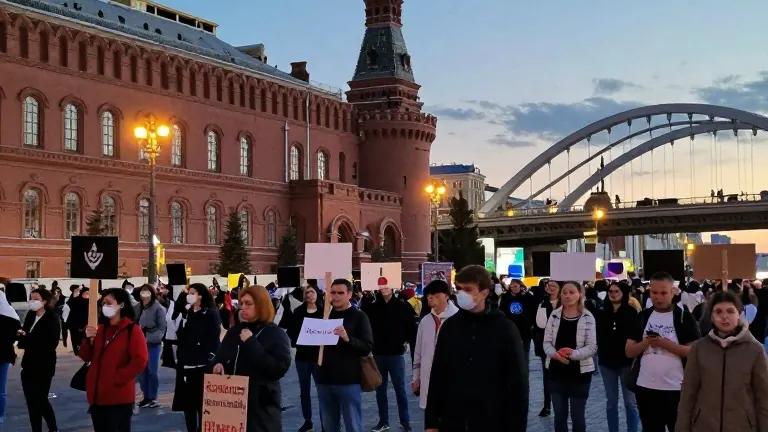
Tbilisi hosted more than 5.5 million international tourists in 2025, an 8.4 percent increase over the previous year. The Georgian National Tourism Administration reported the figure as the capital prepared to mark two years since the contested parliamentary elections of October 26, 2024. This surge in visitors contrasts with the ongoing political standoff in the capital, where protests have continued for two years.
The political crisis began after the government, led by Prime Minister Irakli Kobakhidze and the Georgian Dream party, decided not to schedule the opening of EU accession negotiations before the end of 2028. Georgian Dream has held power since 2012. Protesters have marched from Avlabari Square in Tbilisi’s Armenian quarter to Freedom Square every Saturday. The demonstrations peaked on November 28, 2024, when the government announced its decision regarding EU talks.
Many residents view the suspension of EU negotiations as a move closer to Moscow. Georgia received EU candidate status in 2023. The country is roughly the size of Ireland and has a population of fewer than 4 million. It emerged from the Soviet Union in 1991. The nation sits between Russia and Turkey, alongside Armenia and Azerbaijan.
Tourists from the Middle East and Russia have contributed to the recent rise in visitor numbers. Following Russia’s full-scale invasion of Ukraine in 2022, tens of thousands of Russian citizens relocated to Georgia. These new residents opened businesses and purchased homes across the country. This influx has pressured the property market and fueled local discontent.
Georgians remain wary of Russia due to the conflicts of the early 1990s and the August 2008 war. Russian military control over Abkhazia and South Ossetia covers approximately 20 percent of Georgian territory. Diplomatic relations were severed after the 2008 conflict. Despite this political distance, Moscow remains an economic partner. Trade, tourism, remittances, and energy imports support the Georgian economy.
The economy grew by 7.5 percent in 2025, marking five consecutive years of expansion. However, the country still faces unemployment, low wages, and widespread poverty. Rural areas experience depopulation. The relationship with Brussels has deteriorated as the EU criticizes the government’s record on the rule of law and political repression.
Bidzina Ivanishvili founded Georgian Dream in 2012. He served as prime minister from 2012 to 2013 and made his fortune in Russia during the 1990s. Ivanishvili, now in his 70s, renovated the Rustaveli theatre, a symbol of national independence, about 20 years ago. Tbilisi’s capital city features a lively underground scene and repurposed industrial spaces.
The next major milestone for the protests is the two-year anniversary of the October 2024 elections. The government continues to govern while the EU maintains its criticism of Georgia’s political direction.
Source: The Guardian