St. Johns River Basin faces weeks of high water after 1,000-year storm hits Central Florida
Meteorologist Jessie Schaper warns that water draining from Melbourne and Palm Bay will keep river levels rising in Jacksonville for the coming weeks.
By Grace Sullivan ·
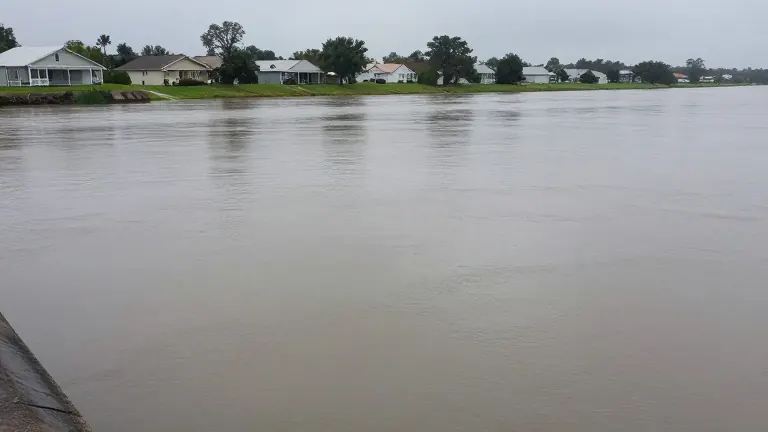
The National Weather Service in Melbourne projects that river flooding will affect major cities along the St. Johns River Basin for several weeks. This forecast follows a severe weather event on November 2 that placed more than 200,000 residents in Melbourne, West Melbourne, and Palm Bay at risk of life-threatening flash flooding. Meteorologist Jessie Schaper stated that the water from the recent rainfall is still moving northward, meaning downstream communities like Jacksonville should expect continued rising levels.
The Melbourne NWS office issued a Flash Flood Emergency after recording over one foot of rainfall in the region. Schaper described the event as a 1 in 1,000-year occurrence. Her own neighborhood in West Melbourne received approximately 18 inches of rain. By early Tuesday morning, areas one mile north of Grant-Valkaria and Malabar had accumulated more than two feet of precipitation.
Although the immediate rainfall has stopped, the threat of river flooding persists in Central Florida and further north. Schaper explained that the water impacting portions of Palm Bay, Melbourne, and West Melbourne is now draining into the St. Johns River. Because the river drains such a large area, the flow continues to move northward, keeping river levels elevated.
Receding water levels are a slow process in the region. In Melbourne, it took three days for the water to fully recede. Palm Bay and Grant-Valkaria may still have standing water. Schaper noted that Florida lacks significant terrain changes, so floodwater tends to relocate to the lowest available ground levels rather than draining quickly into the sea or through deep valleys.
Schaper emphasized that driving through floodwater remains dangerous because the depth is unknown and road surfaces may be compromised. She cited instances in the Melbourne and Palm Bay area where roads were completely washed away, a fact that remained hidden until the water receded. She also observed cars becoming stranded and submerged during the event. Her primary safety reminder is to turn around and not drown.
Walking through floodwater presents additional risks. The water may contain bacteria, downed power lines, and alligators. During the November 2 event, no official evacuation orders were issued in Melbourne. However, law enforcement advised residents to stay in their homes due to road closures. Schaper noted that the floodwater at her home was less than a quarter of an inch from seeping inside.
Residents who do evacuate should follow law enforcement recommendations and expect to take longer than usual due to alternate routes. For multi-story homes, moving to a higher level is advisable. Schaper recalled hearing about residents who evacuated to their kitchen countertops when water entered their homes. For one-story homes without attics, climbing to the highest available space may be necessary.
Public works crews are currently repairing washed-out roads. Schaper warned that some road closures may remain in place, requiring commuters to use alternate routes. She recommended that residents check if they live in a designated flood zone, noting that areas outside these zones can still experience major flooding events every 200, 500, or 1,000 years.
Preparation steps include storing water, flashlights, and other necessities on higher ground levels. Residents can monitor water intrusion through garages and exterior doors to protect their homes. Schaper also encouraged residents to sign up for Brevard Emergency Management alerts to receive notifications on their phones.