Sheffield Researchers Recreate Mystery Color of 1,600-Year-Old Roman Cup
A UK team used ancient recipes and modern science to produce glass that shifts from green to red, matching the Lycurgus Cup.
By Grace Sullivan ·
A 1,600-year-old Roman puzzle was solved in a Sheffield laboratory last week.
Researchers at the University of Sheffield successfully recreated the dichroic glass used in the Lycurgus Cup. The artifact, currently housed in the British Museum, is one of only 40 surviving glass cage cups from the fourth century CE. It is considered one of the most complete examples of its kind.
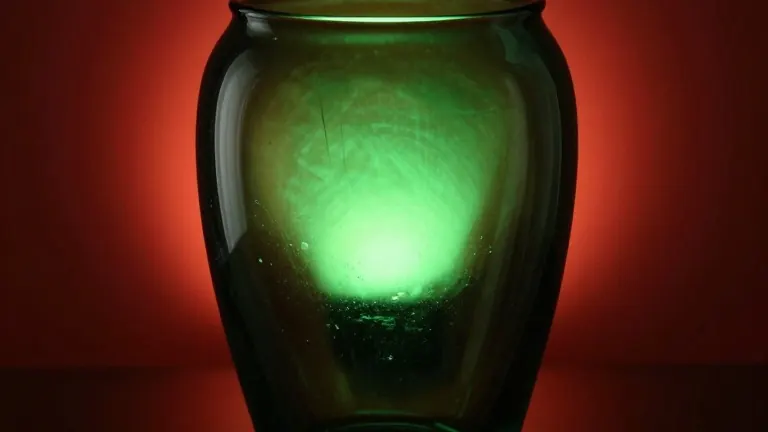
The cup is famous for its ability to change color based on lighting conditions. In reflected light, the material appears jade green. When light passes through it, the glass turns ruby red. In 2022, an international panel of artists and conservators named the Lycurgus Cup one of the seven glass wonders of the world.
Dr. Lisa Hollands, a technician in the university's school of chemical, materials and biological engineering, led the effort to reproduce the material. She worked alongside Professor Caroline Jackson, a leading Roman glass expert, to analyze a fragment of the original artifact. They developed a base glass using modern materials designed to mimic Roman ingredients. The team then faced the difficult task of embedding precise amounts of gold and silver nanoparticles into the mixture.
Hollands noted that the process required more than simply adding nanoparticles to a standard batch. She spent over 25 years studying glass and applied that experience to the project. The team experimented with different furnace types, raw materials, and oxygen levels to refine the recipe. They were challenged to complete the work for the university's 2025 LightFest by Christina Metcalfe, the project manager for the Molecular Photonic Breadboards Project.
Once the glass formula was finalized, the team commissioned a contemporary sculpture to showcase the new material. Elliot Walker, a UK glass artist and winner of the second season of Netflix's Blown Away, was selected for the task. Walker said he wanted the piece to remain classical in form while incorporating a blown element to display the dichroic effect. The final sculpture blends the story of Lycurgus with the Farnese Atlas, replacing the globe with the cup.
The new glass was first exhibited at LightFest, a project run by the Molecular Photonic Breadboards in partnership with the Universities of Sheffield and Bristol. The event was funded by the Engineering and Physical Sciences Research Council. Walker described the opportunity to work with glass derived from ancient recipes as rare and exciting. He said the experience allowed him to understand how ancient makers adapted to the material.
Walker’s sculpture is scheduled for public display at the Millennium Gallery in Sheffield from November 6 to 15. Following that exhibition, the piece will move to the Turner Museum of Glass at the University of Sheffield. Metcalfe stated that the team aimed to create a tangible object that helps the public understand the science of embedded nanoparticles. She added that the historic narrative of the project has captured the imagination of those involved.