Nvidia CEO Jensen Huang argues US and China can both win in AI race
The chipmaker's leader told BBC News that exporting advanced technology is not a zero-sum game, a view that contrasts with national security assessments.
By Ethan Cooper ·
Jensen Huang, the chief executive officer of Nvidia, has publicly argued that the United States and China can both benefit from the development of artificial intelligence. He made the comments during an interview with BBC News correspondent Faisal Islam, who met Huang in September of last year. The meeting took place during a state visit by US President Donald Trump to the United Kingdom. At the time, Huang was lobbying for the lifting of export bans on high-performance AI chips.
Huang stated that President Trump and Chinese President Xi Jinping share a common goal of national success. He told Islam, "President Trump is very clear. He wants America to win and and President Xi wants China to win, and it's possible for both of them too. And the reason for that is because it's not a zero-sum game. The advance of human society is not a zero-sum game." Huang suggested he had personally convinced Trump of this position. This assessment places his view in direct opposition to many national security officials. They maintain that the race for advanced AI is strictly zero-sum, requiring the West to restrict Chinese advancement to protect its own interests.
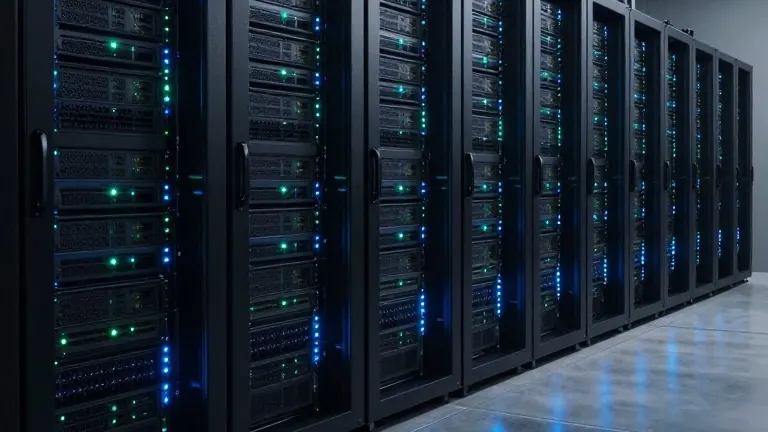
The debate centers on Nvidia's role in the global AI infrastructure. The company produces the microchips that power the most powerful frontier AI models. These chips are manufactured in Taiwan and are based on technology originally developed for graphics cards. The chip names, such as Gracehopper, Vera, and Rubin, are central to the industry but remain largely unknown to the general public. Huang argued that it is actually better for the United States if the world, including China, becomes dependent on American systems. He referred to this reliance on the "American tech stack" with Nvidia chips at its core as a strategic advantage rather than a vulnerability.
Huang further contended that computing technology should not be viewed as a national security concern. He told Islam that President Trump is "very clear-eyed" on this point. Huang added, "any military is smart enough to build their military on top of their own indigenous technology, and not rely on an adversary to build their technology, build their military capability." He was pushing specifically for the release of the H200 chip, a high-performing model that had been subject to export controls. A ban on a less powerful chip had already been lifted at that time.
The timing of these public statements has drawn attention. Huang is currently under independent investigation regarding national security concerns and an alleged affair with a Chinese spy. His public push to lift export bans and his dismissal of security risks coincide with this scrutiny. The investigation highlights the tension between commercial interests in the semiconductor sector and government security protocols. Huang's position suggests that restricting sales to China creates more risk than allowing access to US hardware.
Nvidia remains the central company in the US AI boom and the global competition for technological supremacy. The company generates approximately $400 billion in revenue this year. Despite recent market fluctuations, its financial health remains strong. A 4 percent drop in its stock value on Monday reflected new risks at the intersection of technology and global politics. The chipmaker is still valued at more than $4 trillion, a figure that underscores its dominant position in the market.
More Business · Bad Service · Report a business · Got a Story?